You put a new battery in and it lasted three weeks. Or the bike started fine all summer and then died at a set of lights in traffic, in the dark, with everything on. Or the dash blanked for a second on the motorway and came back, and now you are watching it.
The part everybody names for this is the stator, and everybody is roughly right. It is the alternator of a motorcycle, and when it fails the battery is the thing that dies — which is why the battery gets replaced first, and why the second battery dies too. A motorcycle stator test is three measurements with a cheap multimeter, and it is the only thing that settles which of the two you are actually looking at.
What surprised me was not the mechanics. It was the paperwork. I went looking for what the rulebook says about the system that keeps a motorcycle running, and found that the federal standard governing what your instrument panel is required to show you contains exactly two items, neither of them the charging system; that Europe at least has a name and a colour for the warning light; and that when someone finally asked the United States government to look at motorcycles stalling in traffic because their stators had failed, the file was closed with the phrase customer satisfaction issue.
So here is the stator test, in the order the measurements actually make sense. And then the documents, because they change how you read the result.
What a stator actually is
A motorcycle does not have an alternator in the shape a car has one — a separate unit bolted to the engine and driven by a belt. It has the same machine, taken apart and built into the engine.
Two pieces do the work. The rotor is a ring or cup of permanent magnets that spins with the crankshaft. The stator is the stationary part it spins around or inside: a ring of copper windings on a laminated iron core, bolted inside the crankcase cover and bathed in engine oil on most machines. Magnets move past coils, coils make current. That is the whole of it, and it is why the stator has no brushes, no belt and nothing to adjust — and also why it lives in the hottest, oiliest place on the bike.
What comes out is alternating current, usually in three phases, and its voltage climbs with engine speed. A battery cannot use any of that. Between the two sits the regulator/rectifier: the rectifier half turns AC into DC, and the regulator half throws away everything above the level the battery and the electronics can take. On most motorcycles it throws it away as heat, which is why the unit is a finned lump bolted somewhere in the airflow.
So the chain is short and every link matters:
rotor magnets → stator windings → regulator/rectifier → battery and everything electrical on the bike.
The battery is not the power source once the engine is running. It is a buffer. It starts the bike, it fills the gaps when demand spikes above what the stator is making at that moment, and the rest of the time it should be being topped back up. When the charging side stops working, the battery becomes the only source — and a motorcycle battery running the ignition, the lights and the fuel pump on its own is measured in tens of minutes, not hours.
That is the fact underneath everything else in this article. A stator failure is not a battery problem that gets worse. It is a countdown that begins the moment it happens, and unlike a flat tyre it gives you nothing to look at.
The federal standard for what your bike may tell you has two rows in it
There is a Federal Motor Vehicle Safety Standard specifically about motorcycle instrumentation. It is FMVSS 123, at 49 CFR § 571.123, and its title is Motorcycle controls and displays. Its scope:
This standard specifies requirements for the location, operation, identification, and illumination of motorcycle controls and displays, and requirements for motorcycle stands and footrests.
It applies, per S3, to every motorcycle with handlebars except police machines. The section that governs displays is S5.2.2:
If an item of equipment listed in Table 2, Column 1, is provided, the display for such item shall be visible to a seated operator under daylight conditions, shall illuminate as specified in Column 2, and shall operate as specified in Column 3.
Table 2 is called Motorcycle Display Illumination and Operation Requirements. It is the complete list of displays this standard governs, and it has two rows:
| Display | Illumination | Operation |
|---|---|---|
| 1. Speedometer | Yes | The display is illuminated whenever the headlamp is activated. |
| 2. Neutral indication | Green display lamp | The display lamp illuminates when the gear selector is in neutral position. |
That is it. How fast you are going, and whether you are in neutral. Nothing about oil, nothing about temperature, nothing about the system that is keeping the engine running.
There is another standard that does regulate warning lights in detail — FMVSS 101, at 49 CFR § 571.101, Controls and displays. It defines the word:
Telltale means an optical signal that, when illuminated, indicates the actuation of a device, a correct or improper functioning or condition, or a failure to function.
It specifies where telltales go, what colour each one must be, how bright, and which ones may never share a display space with another message. And then there is S3:
This standard applies to passenger cars, multipurpose passenger vehicles, trucks, and buses.
Motorcycles are not in that sentence. They have their own standard, and their own standard has two rows.
Europe at least has a name for the light, and a colour
Cross the Atlantic and the same question has a different answer — not a better one, but a more explicit one.
Motorcycle instrumentation in Europe is type-approved under Regulation (EU) No 168/2013. Its Annex II lists the functional safety requirements, and item 7 is driver-operated controls including identification of controls, tell-tales and indicators, applicable to L3e — ordinary motorcycles — among others. The technical content behind that line is UN Regulation No. 60, published in the Official Journal of 31 March 2004, whose full title is Uniform provisions concerning the approval of two-wheeled motor cycles and mopeds with regard to driver-operated controls including the identification of controls, tell-tales and indicators.
Paragraph 5.3.1 sends you to Annex 4:
The controls, tell-tales and indicators, when fitted, shall be identified in accordance with the provisions of annex 4.
Annex 4 is a numbered list of symbols with the colour each warning light must be. Paragraph 8 sets the code:
Red: Danger
Yellow (Amber): Caution
Green: Safe
And then, at Figure 9, between engine coolant temperature and engine oil:
Battery charging
Colour of tell-tale light: red
Red means danger, in the regulation’s own words. Not caution — danger, the same category as coolant temperature and oil pressure.
Before this becomes a story about European superiority, read paragraph 2 of the same annex:
This annex is applicable to those controls which, when used, are fitted on the instrument panel or in the immediate vicinity of the motor cycle or the moped driver. This definition of application does not signify the mandatory presence of each and every control listed, in this annex.
So Europe does not require the light either. What it does is give it a name, a symbol and a rank: if your bike has one, it is red, and red means danger. The American motorcycle standard does not contain the item at all.
The other thing worth noticing is what is covered by the EU’s electrical safety requirement, which sounds like it ought to be relevant. Annex II lists it, and the requirement behind it reads:
Vehicles of category L, with respect to the electric power train when equipped with one or more traction motor(s) operated by electric power and not permanently connected to the grid, as well as their high voltage components and systems which are galvanically connected to the high voltage bus of the electric power train, shall be designed so as to avoid any risk to electrical safety, in using relevant requirements of UNECE regulation No 100 and ISO 13063.
That is the traction system of an electric vehicle. The twelve volts that run your ignition, your fuel pump and your headlight are somewhere else entirely — which is to say, nowhere.
The only federal number about your electrics is a bench test
There is one place where American federal law puts a number on a motorcycle’s electrical system, and it is worth knowing because it is not where you would expect.
FMVSS 108, at 49 CFR § 571.108, is the lamps standard, and unlike FMVSS 101 it does apply to motorcycles — S3.1 lists “passenger cars, multipurpose passenger vehicles, trucks, buses, trailers … and motorcycles”. It is the standard that decides your headlamp is bright enough and aimed correctly. Buried in the test procedures, at S14.2.5.4:
All sealed beam headlamps, integral beam headlamps, beam contributors, and replaceable light sources are seasoned at design voltage for 1% of its average design life or 10 hours, whichever is less prior to a photometry test. A headlamp is tested at 12.8 v. ±20 mv, D.C. as measured at the terminals of the lamp.
Twelve point eight volts, plus or minus twenty millivolts. That is the precision the federal government brings to the question of how much light reaches the road — on a laboratory bench, with a power supply.
Now search the same standard for the machine that has to supply that voltage on the road. In the entire 280-thousand-character text of § 571.108, the word battery appears zero times. So does charging. So does alternator, stator and generator. The phrase electrical system appears once.
The lamp is regulated to twenty millivolts on a bench. Nothing requires your motorcycle to deliver anything at all to it while you are riding.
That is not a scandal — the standard is about the lamp, and it is a good standard. But it is the shape of the whole problem in one page: everything downstream of the battery is specified, and the thing that fills the battery is not mentioned.
What happened when somebody actually asked
None of this would matter much if the failure were rare or gentle. So I went to the file where it is neither.
The National Highway Traffic Safety Administration keeps an Office of Defects Investigation, and its investigation database is published as an open flat file. I downloaded it: 154,303 rows, dated 21 August 2026. Searching every title and closing summary in it for stator, rectifier or charging system returns six investigations in the history of the agency. Five are cars, buses and trucks. One is a motorcycle.
It is PE12035. Subject vehicle: Buell 1125, model year 2009. Manufacturer: Harley-Davidson Motor Company. Component: ELECTRICAL SYSTEM: ALTERNATOR/GENERATOR/REGULATOR. Opened 16 November 2012, closed 16 April 2013. Subject line: Motorcycle Stalling.
The opening sentence of the closing summary:
ODI opened this investigation based on 25 allegations of subject motorcycle stalling, without warning, due to charging system failure (typically involving the stator).
They did not just read the complaints. They went and measured the thing riders actually want to know:
As part of this investigation, testing was conducted to assess whether there would be a reasonable warning prior to stator-related engine shut-down while underway.
Then the finding:
Given the relative frequency of alleged stator failures involving Buell 1125’s, it is apparent that customers may not be satisfied with their motorcycle.
And the conclusion:
However, current test data does not establish that this customer satisfaction issue is also a safety defect that results in an unreasonable risk to motor vehicle safety.
>
In the absence of a safety defect trend related to Buell 1125 charging system failures, this investigation is closed.
The summary lists the complaint numbers it relied on. There are 62 of them.
To be fair to the agency, that phrasing is not a shrug — it is a legal test, and the test is written down. 49 U.S.C. § 30102(a)(9) defines what the agency is allowed to act on:
“motor vehicle safety” means the performance of a motor vehicle or motor vehicle equipment in a way that protects the public against unreasonable risk of accidents occurring because of the design, construction, or performance of a motor vehicle, and against unreasonable risk of death or injury in an accident, and includes nonoperational safety of a motor vehicle.
A defect on its own is not enough. § 30102(a)(3) is deliberately broad — “defect” includes any defect in performance, construction, a component, or material — but the recall obligation only attaches when the defect is safety-related. 49 CFR § 573.6(a) is where that bites:
Each manufacturer shall furnish a report to the NHTSA for each defect in his vehicles or in his items of original or replacement equipment that he or the Administrator determines to be related to motor vehicle safety…
No safety finding, no report, no recall. A motorcycle that shuts down in traffic without warning did not clear that bar in 2013.
There is one more document in the chain, and it is the one that explains why any of this is visible at all. The investigation mentions that Harley-Davidson had already acted:
An example of a manufacturer responding to this type of dissatisfaction is found in the Harley Davidson December 7, 2009 product improvement campaign to address the stalling issue.
A product improvement campaign is not a recall. Nobody has to write to you, nothing has to be free, and there is no campaign number to look up on a government website. But it does not happen in the dark, because 49 CFR § 579.5(a) requires manufacturers to send the agency copies of
all notices, bulletins, and other communications (…including warranty and policy extension communiqués and product improvement bulletins) … regarding any defect in its vehicles or items of equipment …, whether or not such defect is safety-related.
Whether or not such defect is safety-related. That clause is the reason a quiet fix leaves a paper trail — and the reason an investigator in 2012 could cite a 2009 campaign that was never a recall.
The recall that happened, and the one that did not
Two entries from the same manufacturer, three years and one continent of paperwork apart, say more than any argument.
The one that happened. Campaign 22V030000, filed by Harley-Davidson:
Harley Davidson Motor Company (Harley-Davidson) is recalling certain 2021 Pan America 1250S (RA1250S), Pan America 1250 (RA1250), and Sportster S (RH1250S) motorcycles. The instrument cluster module may not display the speedometer and neutral indicator at start-up when the module is below freezing temperatures. As such, these vehicles fail to comply with the requirements of Federal Motor Vehicle Safety Standard number 123, “Motorcycle Controls and Displays.”
The consequence, in the manufacturer’s own words: “Operating a motorcycle without a visible speedometer or neutral indicator may increase the risk of a crash.”
A speedometer that does not appear on a cold morning is a federal noncompliance and produces a recall — because the speedometer and the neutral indicator are the two rows in Table 2.
The one that did not. The 2009 Buell 1125R, the model at the centre of PE12035: NHTSA’s recall lookup returns zero campaigns for it. Its sibling the 1125CR has exactly one, 08V554000, and it is about a cam chain tension guide breaking up and starving the oil pump — not the charging system.
The bike that stalls in traffic gets an investigation and a closing note. The bike whose speedometer is late on a cold morning gets a recall. Both are correct applications of the same standard, which is the point.
What 144 riders wrote down
The complaints themselves are public too, and they are the other half of the picture. NHTSA publishes them as a flat file: the copy I pulled on 22 August 2026 holds 2,237,179 rows covering 1,613,423 distinct complaints across every kind of vehicle sold in the United States since the mid-1990s.
Filter it for narratives containing the word stator and you get 220 distinct complaints. Keep only the ones about powered two-wheelers and 144 remain.
Where they land is not evenly spread:
| Make | Complaints mentioning “stator” |
|---|---|
| Buell | 60 |
| Harley-Davidson | 31 |
| Suzuki | 27 |
| Kawasaki | 7 |
| Honda | 5 |
| Aprilia | 4 |
| KTM, BMW, Indian | 2 each |
| Ducati, Kymco, Victory, Triumph | 1 each |
Sixty of the hundred and forty-four are Buells, and fifty-nine of those sixty are the 1125R and the 1125CR — two models of a brand that stopped building motorcycles in 2009. The filing dates cluster exactly where you would expect: thirty in 2011, twenty-one in 2012, seventeen in 2013, thirteen in 2014.
The related words tell the same story at smaller scale: 46 motorcycle complaints mention a rectifier, 53 a voltage regulator, 62 a charging system, 17 an alternator. Five of the 144 stator complaints are flagged as involving fire, four as involving a crash.
One of the 62 complaints cited by PE12035 is ODI 10373814, filed on 2 January 2011 about a 2009 Buell 1125R with 8,044 miles. The rider’s own account of what a charging failure looks like from the saddle:
WHEN THE SYSTEM VOLTAGE COMES ON I HAVE NO IDEA HOW FAST I AM GOING, I HAVE NO GAUGES, AND MOST IMPORTANT I HAVE NO TURN-SIGNALS.
And this is not a historical curiosity about a dead brand. The fourth-largest model in the list is the Harley-Davidson RA1250S — the Pan America 1250 Special, with seven complaints, and the filings are recent. ODI 11622753, filed 30 October 2024:
The stator/ rotor on the 2021 Pan America will fail resulting in engine failure, leaving the rider exposed in traffic or stranded. In my case the amp gauge went below 12 and the battery light came on while riding in traffic.
ODI 11678066, filed 3 August 2025:
Stator cuts out intermittently causing vehicle to stall while riding.
There is no open investigation into the Pan America’s charging system. There is no recall for it. Searching the entire investigation file for Harley-Davidson and Buell returns eighteen investigations across thirty-five years, and not one of them is about that motorcycle. The only recall the Pan America has in this territory is 22V030000 — the speedometer that does not come up in the cold.
Five figures per rider, incidentally, is what those complaints say the repair costs — three thousand five hundred, five thousand, six thousand dollars for the updated parts and the labour to fit them. Those are riders’ own numbers in their own filings, not a manufacturer’s price list, and I quote them as such. But they are a decent argument for testing the thing before you replace anything.
Bad stator symptoms, in the order they arrive
The failure has a shape, and knowing the shape is most of the diagnosis. What follows is the sequence riders describe over and over in that complaint file, and it is worth reading in order because the early entries are the cheap ones.
Stage one: the battery gets tired on short rides. The bike starts fine after a long run and cranks slowly after the commute. This is the one everybody misreads, because it looks exactly like a battery reaching the end of its life. The tell is the pattern: a dying battery gets worse everywhere, a dying charging system gets worse specifically on short trips, in traffic, at night and with heated kit on — every case where the load is high and the revs are low.
Stage two: a new battery does not fix it. Three weeks, maybe six. If the second battery goes the same way, the charging system is the fault and the batteries were collateral damage. This is the point at which the test below saves you money.
Stage three: the lights start reporting. Headlight dimming at idle and brightening as you rev is normal to a degree on any bike; a headlight that goes visibly dim while you are riding at speed is not. On a machine with a voltmeter or a battery warning light, this is where it appears — and, as above, nothing federal requires either instrument to be there.
Stage four: the electronics get strange before the engine does. Fuel injection, ABS and instrument clusters all have a minimum voltage below which they misbehave, and they hit it before the engine stops. Flickering dashes, spurious warnings, a fuel pump that sounds different on start-up. The Buell rider above lost the speedometer and the indicators while still moving.
Stage five: it stops. An engine with electronic ignition and an electric fuel pump does not limp on a dead battery — it runs until the voltage drops below what the ignition needs and then it is off, usually without a stumble.
There is a symmetric failure that is worth naming because the symptoms invert. If the regulator half fails open rather than short, the system stops throwing away the excess and the battery gets overcharged instead: it runs hot, it smells sharp, bulbs blow in quick succession and the case may swell. Both are charging-system faults. Only one of them announces itself by killing the battery slowly.
Two things that are not stator symptoms, however much they get blamed on one: a bike that cranks but will not fire on an otherwise healthy battery, and a bike that will not crank at all with a good battery. Those are ignition, fuel and starter-circuit problems, and the basic checks every rider should be able to do will get you further than a stator hunt.
The motorcycle stator test: three measurements, in order
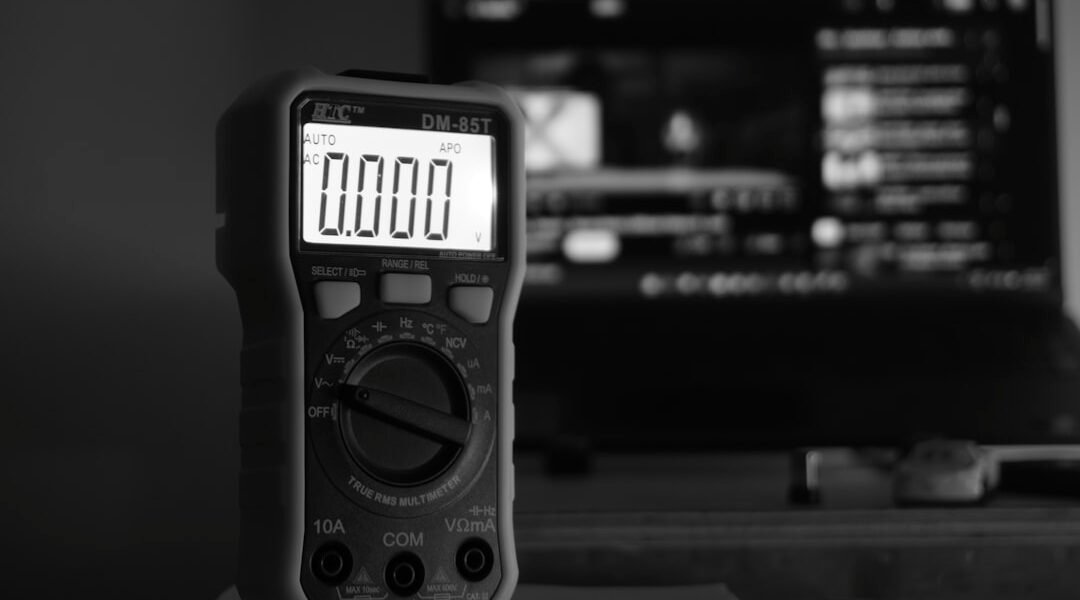
Here is the part I actually came for. It is three measurements with a cheap digital multimeter, and the order matters, because each one only means something once the previous one has passed.
Before anything: the pass and fail numbers for measurements two and three are specific to your model, and they are printed in your service manual. Every forum thread gives one number for every motorcycle, which is exactly the thing a service manual exists to contradict. What follows is what each measurement proves and how to read it — including the two comparisons that work without any manual at all.
A word on safety, since two of these involve a running engine: the crankcase and the exhaust are hot, three-phase leads carry live AC, and a spinning rotor is next to your hands if a cover is off. Work with the bike secure, keep the leads clear of anything that turns, and never disconnect the regulator/rectifier from the battery while the engine is running — with nowhere for the current to go, the voltage rises to whatever the stator can produce.
1. The battery, at rest
Set the meter to DC volts and read across the battery terminals with the engine off and the ignition off. Ideally the bike should have sat for a few hours, because a battery just off a charger or a ride carries a surface charge that reads higher than its true state.
This measurement is not about the charging system at all. It is there to establish that the battery is capable of holding a charge, because every measurement after this one assumes it. If this reading is low, put the battery on a charger, let it rest, and read it again — a battery that will not hold a resting voltage overnight is a bad battery, and that is the case my guide to reviving a battery after storage covers in full. Come back here when a rested battery reads what your manual says it should.
2. The same battery, with the engine running
Leave the probes exactly where they are. Start the engine, let it settle, and watch the same number.
This is the single most useful measurement on a motorcycle’s charging system, and the reason is arithmetic rather than electronics: current only flows into a battery from something at a higher voltage than the battery. So if the reading with the engine running is not clearly higher than the reading you just took at rest, nothing is going into the battery — whatever the cause. If it is higher, something is charging.
Then raise the revs gently and watch what the number does. On a healthy system it climbs a little and then stops climbing: that flat top is the regulator doing its job. Two failures show up here without needing any model-specific figure at all:
- It never rises above the resting voltage, at any rpm. The bike is running on its battery. Stop riding it and go to measurement three.
- It keeps climbing with the revs and does not level off. The regulator has stopped regulating. This is the overcharging failure, and it will cook the battery and the bulbs if you keep riding.
Compare the number you get against the figure in your manual and you have your answer for this model. Compare it against the resting voltage and against its own behaviour with rpm, and you have most of the answer for any model.
Two footnotes that catch people out. First, do this with the lights on and everything switched on that you normally ride with — some systems only reveal themselves under load, and if your bike has heated grips or extra lighting, that is the condition to test in. Second, if you have a voltmeter fitted to the bars, that gadget is doing measurement two continuously, which is the entire reason it is worth having on a machine that is not obliged to warn you about anything.
3. The stator on its own
If measurement two says nothing is charging, the fault is in the stator, in the regulator/rectifier, or in the wiring between them. This step isolates the stator. Unplug the connector between the stator and the regulator/rectifier — on most machines it is a three-pin block with three identical wires of the same colour — and work on the stator side of it.
The AC output test. Set the meter to AC volts. With the engine running, measure between the three pins in pairs: 1–2, 2–3, 1–3. Note all three at the same steady rpm, and note that the numbers rise with revs, so all three must be taken at the same engine speed to be worth anything.
Read them two ways. Against the manual, they should be at or above the specified output at the specified rpm. Against each other, they should be close to equal — and that comparison needs no manual. Three phases in a healthy stator produce the same voltage. One phase low or dead is a failed winding, and you have found your fault.
The resistance test. Engine off, connector still unplugged, meter on ohms. Measure the same three pairs. The absolute value is small and model-specific, but again the three readings should closely match one another. An open circuit on one pair — no continuity at all — is a broken winding.
The short-to-ground test. This is the one with a pass/fail that is the same on every motorcycle ever built. Meter on ohms or continuity, one probe on any of the three stator pins, the other on clean bare metal on the engine case. There must be no continuity. The windings are insulated from the core and the case; if any of them reads a path to ground, the insulation has failed — which is what heat does to a stator eventually — and the stator is finished regardless of what the other two tests said.
Those three sub-tests together are a complete verdict on the stator. If it passes all three and measurement two still says nothing is charging, the fault is downstream: the regulator/rectifier, the connectors, or the wire that carries charge back to the battery.
Stator or regulator/rectifier?
They fail at similar mileages, they produce overlapping symptoms, and they kill each other. It is worth knowing which is which before you buy either.
Connectors first. Before condemning any component, look at the three-pin connector between them and at the main earth strap. Charging systems push real current through small connectors sitting in the weather; a heat-discoloured, melted or corroded block is a fault in its own right and it also causes the resistance that destroys the parts on both sides of it. This is a five-minute check and it is the cheapest possible outcome.
Then the split. The stator is condemned by measurement three: an unequal or missing phase, or continuity to ground. If those three come back clean, the stator is making power and something after it is not delivering it. Regulator/rectifiers can be bench-tested for diode behaviour, but the honest practical test is the sequence above: good AC out of the stator, no DC rise at the battery, everything in between intact — that is a failed regulator/rectifier.
And the reason they take each other down. A regulator that has partly failed makes the stator work into a fault instead of a load, and the stator answers by getting hot. A stator with one shorted winding pushes an unbalanced supply into the regulator, and the regulator answers by getting hot. Fitting a new stator behind a failed regulator is a known way to buy two stators. When one goes, test the other before you rebuild.
There is a maintenance argument in here too, which is that none of this appears on a service schedule. Chain, oil, brake fluid and valve clearances have intervals; the charging system has none, and what the manuals actually schedule is worth reading precisely for what it leaves out. Measurement two takes thirty seconds with the engine idling. It belongs alongside the rest of the pre-ride checks on any bike you are about to take a long way from home.
What kills stators
Nothing in the complaint file suggests stators die of age alone. Four things come up again and again.
Heat. The stator sits inside the engine, usually in the oil, and it is a copper winding whose insulation has a temperature limit. Everything that raises engine temperature raises stator temperature: heavy traffic, long idling, high ambient heat, a cooling system that is not quite right.
Load with no revs. A permanent-magnet alternator makes power in proportion to engine speed. Sitting in traffic with the headlight, the fan, the fuel pump and heated kit all drawing is the worst case for the system, and it is also, for a lot of riders, most of their mileage — one reason commuting by motorcycle is harder on the electrics than touring is, despite the mileage being lower.
Added accessories. Auxiliary lights, heated clothing, phone chargers, sound systems and USB outlets all draw from the same stator, and motorcycle charging systems are sized with far less headroom than car ones. This matters most for exactly the riders who add the most kit — the ones doing distance in the dark, where a headlight upgrade and heated grips can quietly move a system from surplus to deficit. Riding at night is where an underpowered charging system shows itself first.
Bad connections. Resistance anywhere in the charging path turns into heat at that point and makes the whole system work harder. Earth straps, the reg/rec connector, the battery terminals themselves.
The one you can act on immediately is the third. If you have added electrical accessories to a motorcycle and then start seeing the stage-one symptoms above, do measurement two with everything switched on before you blame the stator. You may simply be asking the system for more than it was built to make.
Where RideLog fits, and where it does not
Straight answer first: it does not measure any of this. RideLog reads nothing from the motorcycle. It has no idea what your battery voltage is, cannot see the charging system, and will never warn you that a stator is on the way out. The multimeter is the tool for that and there is no substitute.
What it does hold is the thing the symptom list above actually turns on, which is your riding pattern. A charging system is a balance between what the engine makes and what you spend, and both sides are a function of how you ride rather than how much: trip length, time spent stationary, how much of your mileage is after dark. RideLog detects trips on its own from the phone’s motion sensors and GPS — no start button, no stop button — so by the time the question comes up you already have the record of whether your last three months have been six-mile commutes in traffic or Sunday runs at open-road revs. That distinction is the difference between “this battery is old” and “this bike never gets a chance to charge”.
The rest of it is the ordinary bookkeeping a motorcycle generates: fuel-ups with litres, cost and odometer so real consumption and cost per mile come out on their own, service and document reminders per vehicle, several bikes side by side, statistics by week, month and year, and PDF or CSV export when you want the data out — which, if you ever end up arguing with a dealer about when a fault started, is a dated record rather than a memory. All of it stays on the phone: no cloud, no server, no third party, and it works offline. It is free to start, and you can download it here.
What it will not do is tell you that your stator is failing. Nothing on most motorcycles will. That is the whole reason the three measurements above are worth learning.
Frequently asked questions
How do I test a motorcycle stator with a multimeter?
Three measurements, in order. Read the battery on DC volts with the engine off and rested. Read the same terminals with the engine running: it must be clearly higher than the resting figure, and it must stop rising as the revs climb. If it is not charging, unplug the stator connector and test the stator itself — AC volts between the three pins in pairs at a steady rpm, then resistance between the same pairs, then continuity from any pin to the engine case. The three AC readings and the three resistance readings should match each other, and there must be no continuity to the case at all.
What are the symptoms of a bad stator on a motorcycle?
In the order they usually arrive: the battery gets tired after short rides but recovers on long ones; a new battery dies within weeks; the headlight dims noticeably while riding rather than only at idle; the instruments and the fuel injection start behaving oddly; and finally the engine stops and will not restart. The pattern that distinguishes it from a simply worn-out battery is that a charging fault gets worse in traffic, at night and with electrical accessories on, and better at sustained higher revs.
Can I ride a motorcycle with a bad stator?
Only as far as the battery lasts, which on a bike running an electronic ignition and a fuel pump is typically tens of minutes rather than hours, and less at night. There is no warning stage in between: NHTSA opened investigation PE12035 specifically because riders reported motorcycles “stalling, without warning, due to charging system failure (typically involving the stator)”. If measurement two shows no charging, the sensible move is a recovery truck rather than an attempt to reach home.
What is the difference between a motorcycle stator and an alternator?
They are the same machine described at different scales. The alternator on a motorcycle is built into the engine rather than bolted on: the rotor is a ring of permanent magnets that turns with the crankshaft, and the stator is the fixed winding it turns around. When people say “the alternator has failed” on a motorcycle they usually mean the stator, the rotor or the regulator/rectifier — three separate parts that can be tested separately.
Is it the stator or the regulator/rectifier?
Test the stator on its own and the answer falls out. If the three AC outputs are equal and healthy, the three resistances match, and nothing shows continuity to the engine case, the stator is making power — so if the battery still is not charging, the fault is in the regulator/rectifier, the connector or the wiring. Check the three-pin connector before condemning either part: a melted or corroded block causes the failure it looks like a symptom of, and it can destroy a replacement part as fast as you fit one.
Does a motorcycle have to have a charging warning light?
Not in the United States. FMVSS 123, the federal standard for motorcycle controls and displays at 49 CFR § 571.123, governs exactly two displays: the speedometer and the neutral indication. FMVSS 101, which regulates telltales and their colours in detail, states that it applies to “passenger cars, multipurpose passenger vehicles, trucks, and buses”. In Europe, UN Regulation No. 60 does name the symbol — Annex 4, Figure 9, “Battery charging”, tell-tale colour red — but the same annex says listing it “does not signify the mandatory presence” of the item. So if your motorcycle has a battery light, its maker chose to fit one.