Calimoto is a good app. I’ll say that up front, because most “alternatives” articles are thinly veiled hit pieces and this one isn’t. If your problem is “take me on the best roads”, Calimoto’s winding-route mode does exactly that, and it does it well. You load it, plot a destination, and it steers you through passes and tight mountain roads instead of motorway slogs. The interface is clean, the offline maps work, and it’s genuinely built for riders, not borrowed from a car app.
But Calimoto is built for one job — scenic navigation — and a lot of riders eventually bump into the things it doesn’t do. You finish a ride and the app forgets it. Your bike’s maintenance needs sit in a notebook. How much fuel did you actually use? The navigation got you there, but the logbook part doesn’t exist.
If that’s a gap you’ve hit, here’s an honest look at what Calimoto is good at, where it stops, and which alternatives (including the one I built) actually fill the gaps.
What Calimoto does well
Calimoto earned its reputation for a reason. Its core strengths:
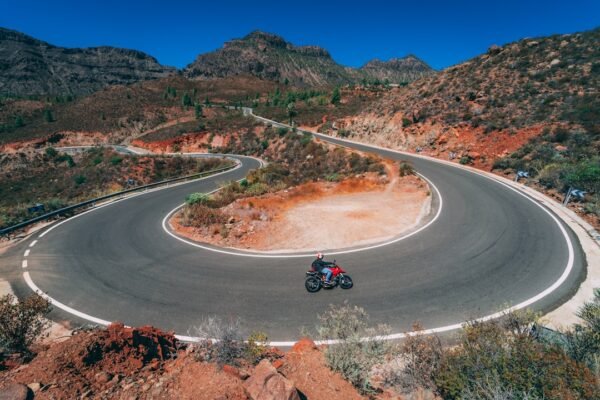
- Winding-route planning. It builds routes that deliberately favour twisty, scenic roads instead of the fastest motorway slog. For a Sunday ride, that’s genuinely useful — it’ll find the passes and tight corners where you actually want to be.
- Turn-by-turn navigation. It guides you to a destination with offline maps and a clear, motorcycle-friendly display. No phone connectivity needed once the route is loaded.
- A riding-focused interface. Built for people on two wheels: large touch targets, weatherproof legibility, sensible defaults.
If pure scenic navigation is all you need, Calimoto is a solid choice and you may not need an alternative at all. If the subscription is the objection, Cardo Ride navigates and records on its free tier: I put Cardo Ride and Calimoto side by side on free tiers and Pro prices. The real question is whether navigation alone fits how you actually use a motorcycle app.
Where Calimoto falls short
These aren’t flaws — they’re the edges of what a navigation app is designed to do:
- It’s a navigator, not a logbook. Calimoto guides you on a route; it doesn’t track fuel, costs, maintenance or build a searchable history of where you’ve ridden over time.
- Your data lives in the cloud. Ride locations and routes are synced to Calimoto’s servers, tied to your account. If keeping your movements off third-party servers matters, that’s a real friction point.
- Scenic routing requires a subscription. The winding-route feature most riders want is behind a paywall.
Calimoto is specialised. Specialised tools excel at one job and skip the rest.
The real alternatives, by what you need
There’s no single “Calimoto killer”. Different riders are trying to solve different problems, and that matters. Some want cheaper scenic navigation. Others want a bigger community of shared routes. Still others want their bike and ride history properly logged. Looking for a single replacement app usually means settling for something that’s mediocre at several things instead of excellent at one. Here’s how I’d group the honest options by what you’re actually trying to fix.
If you want scenic navigation: Kurviger and Scenic
If your main complaint about Calimoto is the subscription cost or the routing logic, Kurviger and Scenic are the closest alternatives. Detecht Premium belongs on that list too, oddly enough: it sells the same curvy routing on top of a free crash alarm, and I put the two side by side here. Both build routes emphasising twists and scenery over speed, with offline turn-by-turn guidance.
Kurviger, in particular, has a strong European user base and is built by riders for riders. You can fine-tune what “scenic” means to you — favour gravel roads, prioritise mountain passes, avoid motorways, prefer certain road types — and it’ll adjust the route accordingly. The interface is less polished than Calimoto’s, but the routing is genuinely flexible and the offline maps are reliable.
Scenic is newer and more streamlined, with a slicker UI and similar scenic-route logic. Both charge for the navigation itself: Kurviger’s voice guidance sits in its Tourer+ plan, and Scenic’s turn-by-turn is Premium, with a free follow-the-line mode underneath. I put Kurviger, Calimoto and Scenic side by side on price and free tiers. Motobit is the exception: its free tier navigates turn by turn, on routes up to 100 km, and I set out the limits in Motobit vs Calimoto (and Kurviger). If navigation is truly the only job, start with one of these. They won’t track your fuel or remember your ride history, but they’re solid alternatives to Calimoto’s winding-route engine.
If you want a riding social network: REVER
REVER leans into community and ride discovery, with a large library of shared routes. If the part of Calimoto you wish were bigger is “show me what other riders are doing”, REVER is worth a look.
If you want to track, own and share your rides: RideLog
This is the gap I kept running into, and it’s why I built RideLog. It isn’t a turn-by-turn navigator — I’ll be honest about that, and I’ll come back to it. It solves the *other* half of the problem: keeping your rides, your bike and your data in order.
RideLog: the privacy-first logbook
I ride, and I wanted one app that remembered my riding instead of just pointing me down a road. I’d use Calimoto to get somewhere scenic, then arrive with no record of the ride — no distance logged, no fuel burned, no history. That gap is what RideLog fills:
- Automatic ride tracking. No start/stop buttons. Motion sensors and GPS detect when you’re riding and record distance, route, duration and stats on their own. You get a searchable history of everywhere you’ve been: every ride indexed by date, location, distance, duration. Months later, “where did I ride the first weekend in May?” — you know.
- Bike maintenance and costs. Log your fill-ups and RideLog calculates real fuel consumption. Track every repair, service and cost. Set reminders for service intervals, insurance renewal, MOT deadlines — the practical admin that keeps a bike reliable. You own the data, not your mechanic or the manufacturer.
- A private route community. Share roads you love, discover nearby rides posted by other riders, add photos along the way, filter by distance and difficulty rating. Unlike public ride-sharing platforms, only the routes you explicitly choose to share leave your phone.
The part that matters most: RideLog is 100% privacy-first and zero-server. Ride data never leaves your device; you own and control it entirely. It works offline, which is crucial on remote roads where connectivity dies. You’re not building a profile for anyone; you’re building a personal archive.
The honest caveat: RideLog is not a turn-by-turn navigator. If “guide me step-by-step to this destination” is your need, Calimoto or Kurviger will do that better. RideLog runs *alongside* a navigator — it captures everything the navigator ignores: the actual riding, the fuel efficiency, the bike’s history, the roads themselves. The real workflow is a navigator to get there, RideLog to own what you did. That’s why most riders pair both instead of expecting one app to do everything.
Download RideLog for free — on iPhone and Android.
Which app actually solves your problem?
- Scenic navigation only → stay with Calimoto, or try Kurviger.
- Ride discovery and social routes → REVER.
- Tracking, fuel, maintenance, and private ride history → RideLog as your logbook, paired with any navigator you choose.
Most riders don’t need one app to replace Calimoto. They need a navigator to get there and a logbook to keep the riding afterwards.
Here’s what that looks like in practice: Saturday morning, you open Kurviger or Calimoto, plot a route through your region’s best roads, and it guides you turn-by-turn. While you ride, RideLog is quietly recording in the background — GPS track, motion data, time, fuel consumed later from your fill-up. You finish the ride. The navigator forgets it; RideLog adds it to your searchable history. You log your fuel burn and maintenance. Next month, you want to remember “where were we that great weekend with the switchbacks?” — RideLog shows you. That’s the actual workflow that works for most riders, and it requires two apps, not one magic app that doesn’t exist.
For a deeper dive into the alternatives, I compared the main options in my guide to the best motorcycle apps in 2026, and if you’re curious about how ride tracking actually works, I wrote about GPS trackers and ride-tracking apps too.
Frequently asked questions
What is the best alternative to Calimoto?
Depends on what you need. For scenic turn-by-turn navigation, Kurviger is the closest alternative. For ride discovery and community, REVER. For tracking, fuel, maintenance and a private ride history, RideLog fills what Calimoto doesn’t offer. Most riders actually pair a navigator (whether Calimoto or Kurviger) with RideLog, rather than swapping one for the other.
Is there a free alternative to Calimoto?
Calimoto’s scenic routing requires a subscription. Three subscriptions, in fact, since August 2026 — and the one most reviews still quote does not exist any more. Here is what Calimoto actually costs in 2026, free tier included. RideLog is free with all core features (automatic tracking, logbook, maintenance, route community); there’s an optional premium tier for extra flexibility. But RideLog isn’t a navigator — for free turn-by-turn scenic navigation, Kurviger’s free tier is your closest match.
Is Calimoto’s data private?
Calimoto uses cloud storage and accounts, so your ride locations sync to their servers. If keeping your movements off third-party infrastructure matters, RideLog is the opposite: zero-server, all data on your device, nothing shared unless you explicitly choose to upload a route.
Can I replace Calimoto with RideLog?
Not completely. RideLog won’t navigate you turn-by-turn to a destination. What it does replace is everything else: automatic tracking, ride history, fuel and maintenance logs, and a private route community. The actual setup is a navigator (Calimoto, Kurviger, whatever) plus RideLog for the logbook side — neither app replaces the other; they cover different parts of the ride.
What’s the difference between a route planner and a ride tracker?
A route planner (Calimoto, Kurviger, Scenic) decides where to go and guides you there in real time. A ride tracker (RideLog) records where you actually went — distance, fuel, route, stats — and builds a searchable history. One is forward-looking; the other preserves the past. That’s why riders use both.