You know how much fuel eats into your trip budget. The good news is that you have more room to cut than you’d think: between how you ride, how you keep the bike and how you pack, there are usually a few euros per tank to save. But one thing matters more than all the rest put together: to know whether you’re actually saving, you have to measure your real fuel use — not the manual figure. Here’s how I do it.
Measure real fuel use first
Before you change anything, know your starting point. The manufacturer’s figure comes from a lab, under ideal conditions; yours, in real traffic and with your riding style, is a different number.
You can measure it by hand: note the litres at each fill-up and the kilometres ridden, then divide. Or you can let an app like RideLog do it — it tracks your rides automatically and, by logging fill-ups, works out your bike’s real consumption and cost. That baseline is what tells you, week after week, whether the changes you’re making are actually working or whether you’re just kidding yourself. It matters more than it should, too: while working out what a motorcycle really costs I found that the United States has no official fuel economy figure for one at all, because the statute behind the label starts by counting wheels and stops at four.
Download RideLog for free and keep an eye on your bike’s fuel use and costs — on iPhone and Android.
Adopt an efficient riding style
How you ride is the most powerful lever, and it costs nothing.
- Smooth acceleration and braking — every jerk is burnt fuel. Smooth riding is safer too.
- Hold a steady speed and use momentum on descents and into slowdowns.
- Use the right gear — high engine revs raise consumption.
- Drop weight — the more you carry, the harder the engine works. Empty the top box of what you don’t need.
Stay on top of maintenance and tyre pressure
A well-kept bike uses less fuel — and lasts longer.
Correct tyre pressure
This is the most common and most expensive mistake. Underinflated tyres increase rolling resistance and therefore fuel use (and worsen grip and wear). Check pressure cold and regularly, following the manufacturer’s values.
Regular maintenance
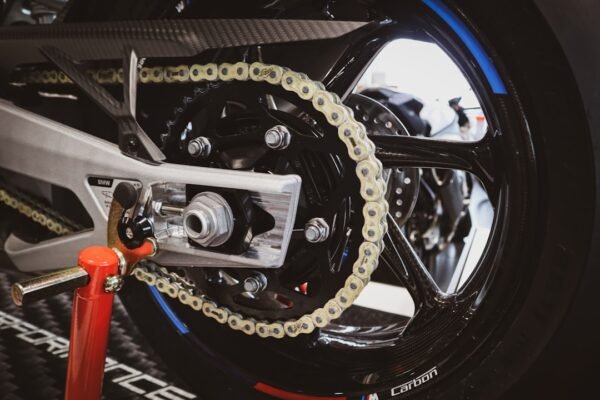
A dirty air filter, worn spark plugs and old oil make the engine run poorly and quietly raise consumption — without you ever noticing. Following the manufacturer’s service schedule is the simplest way to stop wasting fuel, and it’s cheaper than the litres you’d otherwise burn over a season of neglect.
The right fuel
Use the fuel your manufacturer recommends. Going up in octane when the engine doesn’t need it won’t save you money; going below the recommended grade can hurt performance and economy.
Work on aerodynamics and load
At touring speeds air resistance matters a lot. A windscreen suited to your height, an aerodynamic helmet and a tidy load — snug bags instead of sacks that catch the wind — reduce engine strain and fuel use on longer rides. Individually these are small gains, but spread over the kilometres of a long trip they add up to a noticeable difference at the last fill-up.
Check whether you’re really saving
After a few weeks of careful riding and with the bike in good order, compare your average consumption to your starting point. If you’ve been tracking from the start, you have the numbers; otherwise you risk “feeling” more efficient without actually being so. Measuring turns a set of tips into real, verifiable savings.
Frequently asked questions
How do I calculate my motorcycle’s real fuel consumption?
Note the litres at each fill-up and the kilometres ridden between tanks, then divide kilometres by litres (or litres per km × 100 for L/100km). An app like RideLog does it automatically by tracking your rides and logging fill-ups, so you always have up-to-date real consumption and cost.
Does riding slowly really save fuel?
Yes, but smoothness matters more than outright speed: hard acceleration and braking burn far more fuel than a steady pace. A consistent cruising speed in the right gear is the most effective way to use less.
How much does tyre pressure affect fuel consumption?
A lot. Underinflated tyres increase rolling resistance and push consumption up, plus wear sooner and reduce grip. It’s the cheapest check with the best payback: do it cold and regularly.
Is higher-octane fuel worth it for better economy?
No, unless your manufacturer requires it. A higher octane rating than needed won’t reduce consumption or boost performance: use the fuel recommended in your manual.